About

I built this for the person I was at the bottom.

I built this because nobody handed it to me — and nobody should have to spend six years and four continents finding it alone.

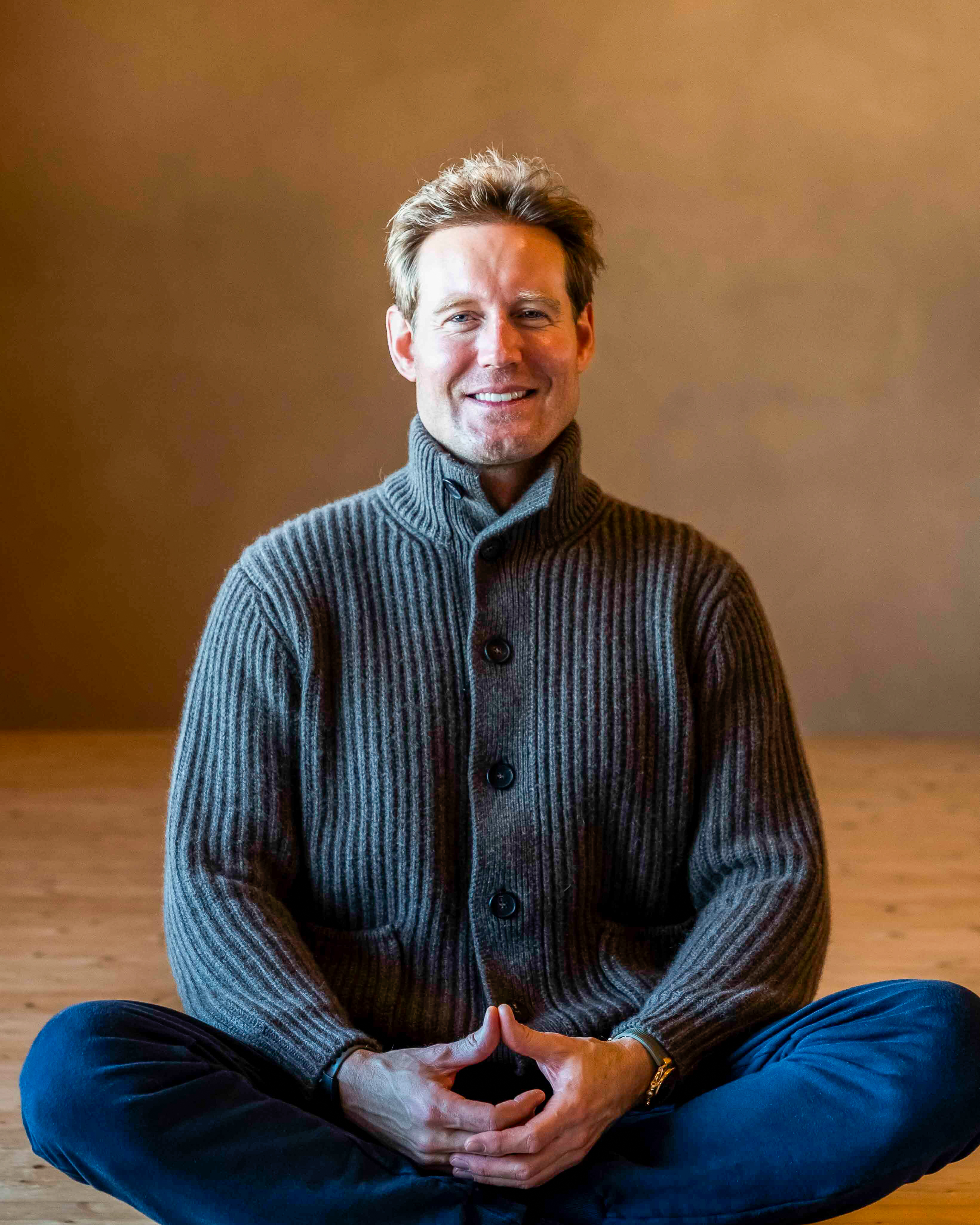
Kai Stubbe, founder of Anxiety Support Hub

There's a version of me that didn't make it through. I think about him sometimes.

He was 35, sitting in a hospital bed in the small German town he'd left at 18, convinced he was about to die. A few hours earlier he'd been walking across the marketplace and his heart had started slamming against his ribs so hard he'd thought this is it, this is the one. By the time the nurses told him he was fine, the imprint was already in. The body had decided that walking across an open square was now dangerous. The body would not be unconvinced for a long time.

That version of me had, by most measures, been winning. Companies built and sold. Titles, trophies, black belts, scratch golf. Nearly ten years in Los Angeles. Time in Dubai, China, Australia, South America. A circle of friends spread across continents. The kind of life people post about.

And then it broke.

Chapter one

The fall

When things in LA started to turn, an opportunity came up in Germany. I took it. People I had known for years were involved, and on paper it looked solid.

It wasn't. Two companies I co-founded or held substantial equity in fell apart inside the same window. I spent two years suing for money I was owed. The bank called me three days before Christmas and explained, in a calm voice, that if I didn't repay them immediately they would come to the house and take the television off the wall.

That was the trigger. And once it landed, everything else I'd been carrying — the things I'd outrun for fifteen years on four continents — caught up with me at once. I won't go into detail here. If you've ever had to land at the bottom in a place that wasn't going to catch you, you already know what that feels like. You can fill in the rest.

For three years it kept getting worse. The panic attacks. The lawsuits. The phone calls. The slow erosion of the life I thought I was building. By the time I ended up in that hospital bed at 35, I had been falling for a long time.

This is the part nobody tells you about going broke and breaking down at the same time: the worst part isn't the money. The worst part is who is waiting for you.

It is easy to have a lot of friends when your life is good. It is a very different thing to keep them when you bring sadness into the room.

I learned something else in those years that I've never seen anyone in this space say out loud. The phone calls I got were almost all from people who wanted to hear how bad it was. It made their own lives feel more manageable. The ones who actually invited me out — who took me to dinner when I had nothing interesting to say and no good news to share — I could count on one hand. I learned who those people were. I will love them for the rest of my life.

And then there was the other thing. The thing I didn't understand until much later. The mask came off. The whole identity I'd built — the international entrepreneur, the guy with the LA address and the stories from four continents and the dinners with people whose names you'd recognise — all of it was just gone. Stripped off, in public, in front of the people I least wanted to see it stripped in front of. At the time, that was the worst part of all of it. Everything I had built my personality on was sand, and the tide had come in.

I didn't know yet that this was the gift.

Chapter two

The six years

After the hospital I went into a clinic for three months. Traditional Chinese Medicine and Western psychotherapy, side by side. It helped. Not because they handed me a system, but because I sat in a room with people who, from the outside, looked completely fine. A beautiful, funny, sharp woman looked at me one afternoon and said, "Kai, I know I'm crazy, but I can't touch this chair or the door knob." That sentence taught me more about the gap between how someone looks and what they're actually carrying than any book I'd read.

Then I started walking.

I returned to Chile, where I'd trained as a Shamanic Energy Medicine practitioner with Alberto Villoldo and the Four Winds Society before the collapse, and tried to apply what I'd learned to myself. I went to a fasting clinic. Then again. Then a third time. Then a fourth. I spent three days alone in a forest, twice, on solo vision quests, sitting with whatever showed up. I trained and certified as a breath coach with Daniel Alan at The Art of Breath. I worked with doctors. I worked with psychologists. I read more than a hundred books.

The teachers I met were extraordinary. Alberto's work transformed how I understood the relationship between energy, story, and the body. Daniel's work changed my relationship with my own breath in ways I am still grateful for. These are deep, lifelong systems built for the full human journey — for healing, for awakening, for becoming. They were never designed to be a step-by-step protocol for what to do when you're about to have a panic attack on a Tuesday afternoon. That wasn't their job.

But nobody was assembling the whole thing specifically for panic and anxiety — because that was nobody's particular focus. The piece I needed didn't exist as a single, sequenced system. Somebody had to put it together.

So I sat down and built it.

Chapter three

What I believe now

I'm not a Harvard psychotherapist. I'm not a licensed psychotherapist either. I am not going to pretend I have credentials I don't have. What I have is six years of brutal personal research, a stack of certifications from teachers I respect, and a nervous system that knows what 3 a.m. panic feels like — because it ran the programme every night for a very long time.

When I'm scared, I don't want a framework I read in a book. I want the voice of someone who has been there. I couldn't find that voice when I needed it. So now I try to be it.

A few things I now believe, that I didn't believe before:

  1. The people most likely to be broken by anxiety are the ones aiming the highest.

    Not because they're weaker. Because they're trying something hard. You can be highly competent, highly ambitious, doing everything right by the world's standards, and still get destroyed. The destruction is not proof that you were stupid or fragile. It is often the cost of having stepped into the ring at all.

    The people loudest in judging you, in my experience, are almost always the ones who never stepped in. And — usually — the least capable of doing so themselves.

  2. You can be excellent and still fail.

    If you step into the ring with someone better than you, you will lose. That does not make you a bad fighter. It makes you someone who was willing to fight above their weight class. Aiming high and falling short is still falling short. It is also a different category of life than never aiming at all. I would rather lose a fight that mattered than win a hundred fights that didn't.

  3. Embodied knowledge and studied knowledge are different categories.

    A framework you read about can collapse at 3 a.m. What survives at 3 a.m. is the voice of someone who has been there. That is the kind of voice I needed and couldn't find. So now I try to be it.

  4. The pain was the tuition.

    Six years, four continents, a hundred books, a dozen teachers, more retreats and clinics and forests than I can list. Walking away without handing the synthesis to someone else would be the actual waste. That's why this exists.

Chapter four

The gift

I would not wish what happened to me on anyone, including the people who handed me the worst of it. I want to be clear about that. There is nothing romantic about a panic attack on a public square. There is nothing instructive about a phone call from the bank three days before Christmas. The suffering was real and at the time it was unbearable.

And I would not trade it.

The thing that hurt the most — losing the identity I'd built my whole life on — turned out to be the thing that saved me.

The mask had to come off. The house of cards had to fall. As long as the identity was intact, I was going to keep building higher on the same foundation of sand. The collapse is what forced me to dig down to bedrock and start again with concrete and steel.

Every serious tradition says the same thing in a slightly different way. The Buddhists say there is no awakening without the dark night. The hero in every old story has to die before he rises transformed. You cannot taste sweet until you have tasted sour. I used to read those things and nod and not really get it. Now I get it. Once you have tasted sour all the way to the bottom of the cup, sweet tastes different forever.

I walk across that same marketplace today. The square where I once couldn't make it more than ten metres without thinking my heart was about to stop. I walk across it and there is a kind of calm in my body that the old version of me — the one with the LA address and the businesses and the international friends — never had. He looked confident. He wasn't. He was running.

The man walking across the marketplace now is not running from anything.

That is a different kind of life. It is, I will say it plainly, a better life than the one I had before any of this happened.

I would not have believed that sentence when I was on the floor. If you are on the floor right now, you do not have to believe it either. You only have to know that someone walked across that bridge and is now writing this to you from the other side.

Chapter five

Why Anxiety Support Hub

Because I don't want you to spend six years figuring this out alone.

Because somewhere right now there is someone who built something good and watched it collapse. Someone who can't walk across a marketplace. Someone whose family is making it worse instead of better, whose friends have quietly stopped calling, and who is starting to suspect that being competent on paper does not protect anyone from this. I was that person. I have a fairly precise idea of what he needs to hear, and in what order, to come through.

So that's the work.

  1. Level I

    Survive first — interrupt the panic loop, give the nervous system a way out, get the floor under your feet.

  2. Level II

    Then Understand — look at why this happened, what your body was trying to tell you, what patterns got you here.

  3. Level III

    Then Transcend — rebuild a life with more meaning, more purpose, and more honesty than the one that broke.

In that order. The order matters. Skipping ahead is what kept me stuck for years.

I'm not promising a cure. I'm not promising it will be quick. I'm promising that there is a way, that the way exists, that I walked it, and that what is waiting on the other side may be better than what you lost.

That's the whole reason I'm here.

— Kai Stubbe, founder, Anxiety Support Hub

Where to go from here

You don't have to figure this out alone.

Start with the free Emergency Toolkit. When you want a person beside you, work with Kai one to one.

No spam·Yours to keep forever·Unsubscribe any time

Turning panic into purpose.

Founded by Kai Stubbe. Built from six years of lived recovery — a clinic, breath-coach certification, more than a hundred books, and one moment in a hospital at 35 that started all of this.

Connect

If you are in danger or thinking about harming yourself, please contact a crisis line or emergency services.

The information here is for educational purposes and is not a substitute for professional medical or psychological care. Everyone's nervous system is different — what works for others may not work for you, and that's okay.

© 2026 Anxiety Support Hub